 Skip to content
EBOO stands for Extracorporeal Blood Oxygenation and Ozonation. It is an extracorporeal ozone therapy technique in which blood circulates through a specialized system outside the body and is exposed to a controlled oxygen-ozone mixture before returning to the circulation.
EBOO has attracted increasing interest among people researching advanced ozone therapy, integrative healthcare, and personalized wellness approaches.
The procedure is different from conventional ozone applications because blood continuously circulates through an extracorporeal system during the session.
Understanding how EBOO works, how a session is performed, how it differs from other ozone applications, and who may be suitable for it is important before considering the procedure.
What Does EBOO Stand For?
EBOO stands for:
Extracorporeal Blood Oxygenation and Ozonation
Each part of the name describes an important characteristic of the procedure.
Extracorporeal means that the blood circulates outside the body during the procedure.
Blood refers to the patient’s own circulating blood.
Oxygenation refers to the controlled use of oxygen.
Ozonation refers to the controlled interaction of ozone with the blood within the extracorporeal system.
Together, these terms describe the basic principle behind EBOO therapy.
What Is EBOO Therapy?
EBOO therapy is a medical ozone application based on extracorporeal blood circulation.
During a session, blood is collected through vascular access and circulated through a specialized system. The blood is exposed to a controlled oxygen-ozone environment and then returned to the patient’s circulation.
The exact equipment, ozone concentration, blood volume processed, session duration, and treatment frequency can vary according to the clinical protocol and individual patient.
For this reason, EBOO should not be considered a procedure that is performed exactly the same way for every person.
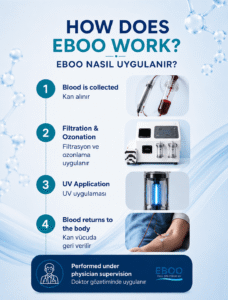
How Does EBOO Work?
The basic principle of EBOO is based on circulating blood outside the body through a controlled extracorporeal system.
The process generally involves:
- Establishing appropriate vascular access.
- Circulating blood through the extracorporeal system.
- Controlled exposure to oxygen and ozone.
- Processing the blood through the system.
- Returning the blood to the patient’s circulation.
The oxygen-ozone interaction takes place outside the body.
This is one of the important characteristics that distinguishes EBOO from methods in which ozone is applied locally or from conventional major autohemotherapy.
What Happens During an EBOO Session?
An EBOO session generally consists of several stages.
Medical Evaluation
Before the procedure, the patient’s health history, current symptoms, medications, and relevant medical conditions should be reviewed.
The purpose of this assessment is to determine whether EBOO is appropriate for the individual.
Vascular Access
Appropriate vascular access is established so that blood can circulate through the extracorporeal system.
Extracorporeal Blood Circulation
Blood moves from the patient into the EBOO system through a controlled circuit.
The blood remains within the system during the processing stage.
Oxygenation and Ozonation
The circulating blood is exposed to a controlled oxygen-ozone environment according to the selected clinical protocol.
Return of Blood
After passing through the system, the processed blood is returned to the patient’s circulation.
Observation
The patient may be monitored following the procedure according to the clinic’s protocol and individual health status.
EBOO and Major Ozone Therapy: What Is the Difference?
EBOO and major autohemotherapy are both ozone therapy methods, but they are not the same procedure.
In major autohemotherapy, a specific amount of blood is collected, exposed to an oxygen-ozone mixture outside the body, and then returned to the patient.
In EBOO, blood continuously circulates through an extracorporeal system during the procedure.
The main difference is therefore related to the way the blood is handled and circulated during the session.
Both methods involve ozone, but their equipment, application techniques, protocols, and clinical approaches can be different.
EBOO and Blood Filtration
EBOO is sometimes compared with dialysis because both involve extracorporeal circulation.
However, EBOO and dialysis are not the same medical procedure.
Dialysis is primarily used to replace or support kidney functions in people with significant kidney failure.
EBOO, on the other hand, is based on extracorporeal blood circulation combined with oxygenation and ozonation.
Although both procedures may involve blood circulating outside the body, their purposes, mechanisms, equipment, and clinical indications are different.
Therefore, EBOO should not simply be described as another form of dialysis.
What Are the Potential Benefits of EBOO?
EBOO has been investigated in different areas of healthcare.
Research into ozone-based approaches has explored potential effects involving:
- Oxidative signaling
- Antioxidant responses
- Blood and vascular biology
- Circulatory processes
- Inflammatory pathways
- Cellular responses
Some clinical studies have reported potentially positive findings in specific medical conditions.
However, the level of scientific evidence varies depending on the condition being investigated and the specific ozone application used.
For this reason, EBOO should not be presented as a guaranteed solution for every chronic disease.
It is more appropriate to discuss its potential effects within the context of an individualized medical evaluation.
EBOO and Circulation
Circulatory health is one of the areas in which extracorporeal ozone approaches have been investigated.
Some research has examined EBOO in relation to peripheral vascular problems and circulation-related symptoms.
These findings have generated interest in the potential role of EBOO in vascular health.
However, people with circulation problems should first receive an appropriate medical evaluation.
EBOO should not be used as a reason to stop an established vascular treatment or medication without medical advice.
EBOO and Chronic Health Conditions
EBOO is sometimes promoted online in connection with a very large number of medical conditions.
This requires a careful and individualized approach.
Research into ozone therapy covers many different areas, but the quality and amount of evidence can vary considerably between conditions.
Therefore, EBOO should not automatically be presented as a treatment for:
- Autoimmune diseases
- Cancer
- Diabetes
- Lyme disease
- Multiple sclerosis
- Viral infections
- Chronic fatigue
- Neurological conditions
Each health condition requires its own medical evaluation.
The potential role of EBOO should be considered according to the individual patient’s condition and the available evidence.
EBOO and Longevity
EBOO has also attracted attention in the field of longevity and healthy aging.
Interest in this area is partly related to research involving oxidative signaling, cellular responses, circulation, and biological regulation.
However, EBOO should not be presented as a scientifically proven method for extending human lifespan.
It is more appropriate to describe longevity as an area of interest and ongoing research rather than making definitive claims about lifespan extension.
How Long Does an EBOO Session Take?
The duration of an EBOO session can vary.
The total time may depend on:
- The equipment being used
- The clinical protocol
- The amount of blood processed
- Vascular access
- Preparation time
- Monitoring requirements
- The patient’s individual condition
Some EBOO protocols may involve sessions lasting approximately one hour, while other protocols can differ.
Patients should therefore receive an individualized session schedule before starting an EBOO program.
How Many EBOO Sessions Are Needed?
There is no universal number of EBOO sessions that is appropriate for every person.
The number and frequency of sessions may depend on:
- The purpose of the application
- The patient’s health status
- Existing symptoms
- Previous sessions
- The clinical protocol
- The physician’s assessment
Different protocols may use different session schedules.
For this reason, a program should be planned individually rather than using a fixed number of sessions for everyone.
Is EBOO Safe?
Safety is an important consideration with any extracorporeal medical procedure.
Because EBOO involves vascular access and blood circulation outside the body, it should be performed using appropriate medical equipment and under professional supervision.
Potential procedural risks may be related to vascular access, extracorporeal circulation, monitoring, anticoagulation when used, and the patient’s underlying health condition.
EBOO should therefore not be described as completely risk-free.
A medical evaluation before the procedure is an important part of responsible EBOO application.
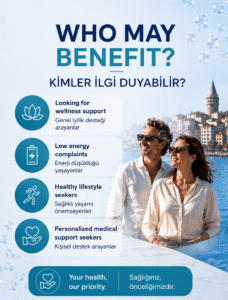
Who May Be Suitable for EBOO?
EBOO suitability depends on the individual.
Before planning a session, a healthcare professional may consider:
- Medical history
- Current symptoms
- Existing diagnoses
- Current medications
- Cardiovascular health
- Relevant laboratory results
- Previous medical treatments
- Individual expectations
The purpose of the evaluation is not simply to determine whether a person wants EBOO, but whether the procedure is medically appropriate for that individual.
Who Should Avoid or Delay EBOO?
Not everyone is necessarily an appropriate candidate for an extracorporeal procedure.
Certain medical conditions may require additional evaluation before EBOO is considered.
Particular attention may be needed in people with significant cardiovascular instability, serious bleeding or clotting problems, difficult vascular access, or other conditions that could increase procedural risk.
The final decision should be made following an appropriate medical assessment.
EBOO vs. Ozone Therapy
EBOO is a type of ozone therapy, but ozone therapy includes many different applications.
Ozone-related approaches may include:
- EBOO
- Major autohemotherapy
- Local ozone applications
- Ozonated oils
- Other ozone therapy protocols
These applications are not identical.
Their equipment, application method, purpose, and clinical protocol may differ.
Therefore, when researching ozone therapy, it is important to understand exactly which procedure is being discussed.
EBOO vs. Dialysis
EBOO and dialysis both involve extracorporeal blood circulation, but their medical purposes are different.
Dialysis is primarily used to replace or support kidney function in people with significant renal failure.
EBOO involves extracorporeal blood circulation with controlled oxygenation and ozonation.
The similarity is mainly related to the extracorporeal circulation concept.
The two procedures should not be considered interchangeable.
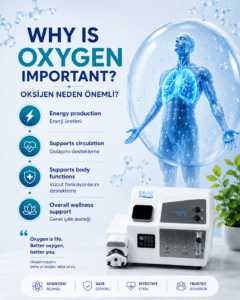
EBOO Machine
The equipment used for EBOO is an important part of the procedure.
Depending on the system, an EBOO setup may include:
- Blood pump
- Extracorporeal tubing
- Filtration components
- Gas exchange components
- Oxygen supply
- Ozone generator
- Monitoring equipment
- Safety systems
The equipment should be designed and operated appropriately for extracorporeal blood circulation.
Proper maintenance, sterilization, monitoring, and professional operation are important components of a safe clinical procedure.
EBOO Therapy in Turkey
Turkey has become an important destination for international patients seeking healthcare services.
For patients considering EBOO therapy in Turkey, choosing an experienced healthcare provider and understanding the procedure are important steps.
Before travelling, international patients should discuss their medical history with the clinic and provide relevant medical information.
Important questions may include:
- Who performs the procedure?
- What equipment is used?
- How is the patient evaluated?
- How long is the session?
- What protocol is recommended?
- How is the patient monitored?
- Is the procedure appropriate for the individual’s health condition?
Having clear answers to these questions can help patients make informed decisions.
EBOO Therapy in Istanbul
Istanbul is one of Turkey’s major healthcare and medical tourism destinations.
Patients travelling to Istanbul for EBOO therapy may benefit from receiving a preliminary medical assessment before their visit.
This can help the healthcare team understand the patient’s medical history, current condition, medications, and expectations.
At Dr. Ergin Ertan Clinic, EBOO applications are evaluated according to the individual’s health status and personal needs.
The aim is to create an individualized approach rather than applying exactly the same protocol to every patient.
Why Choose Dr. Ergin Ertan for EBOO?
EBOO is a technically demanding extracorporeal procedure.
Appropriate equipment, clinical experience, patient evaluation, and careful monitoring are important components of the process.
Dr. Ergin Ertan has extensive experience in ozone therapy, and EBOO applications at the clinic are approached according to individual patient needs.
Before an EBOO program is planned, the patient’s medical history and current health status are considered.
The objective is to provide a medically supervised and personalized EBOO experience.
Frequently Asked Questions About EBOO
What does EBOO stand for?
EBOO stands for Extracorporeal Blood Oxygenation and Ozonation.
Is EBOO the same as ozone therapy?
EBOO is one type of ozone therapy. Ozone therapy is a broader field that includes several different application methods.
Is EBOO the same as major autohemotherapy?
No. Both involve ozone and the patient’s blood, but the way blood is processed and circulated is different.
Is EBOO the same as dialysis?
No. Both may involve extracorporeal circulation, but their purposes and clinical mechanisms are different.
How long does an EBOO session take?
Session duration varies according to the equipment, protocol, blood volume processed, and individual patient factors.
How many EBOO sessions are needed?
There is no universal number. Session frequency and total number should be determined according to individual medical assessment.
Is EBOO a cure for chronic diseases?
EBOO should not be presented as a universal cure. Scientific evidence varies according to the medical condition and the specific application being studied.
Is EBOO completely risk-free?
No medical procedure should automatically be considered completely risk-free. EBOO requires appropriate medical assessment, equipment, sterile conditions, and professional monitoring.
Can international patients receive EBOO in Turkey?
International patients can inquire about EBOO therapy in Turkey. However, suitability should first be assessed according to their medical history and individual health status.
Final Thoughts on EBOO
EBOO is an extracorporeal oxygenation and ozonation technique in which blood circulates outside the body through a specialized system.
The procedure differs from conventional major autohemotherapy because blood continuously circulates through the extracorporeal system during the session.
EBOO has been investigated in several areas of healthcare, particularly in relation to circulation, vascular health, and different chronic conditions. However, the strength of scientific evidence varies between applications.
For this reason, EBOO should be approached with realistic expectations.
The most important question is not simply whether EBOO is available, but whether EBOO is appropriate for the individual patient.
A proper medical evaluation, suitable equipment, trained healthcare professionals, appropriate monitoring, and an individualized protocol are important components of responsible EBOO therapy.
CONTACT US
Interested in EBOO Therapy?
Our team is ready to answer your questions and guide you through every step of your journey.
