 Skip to content
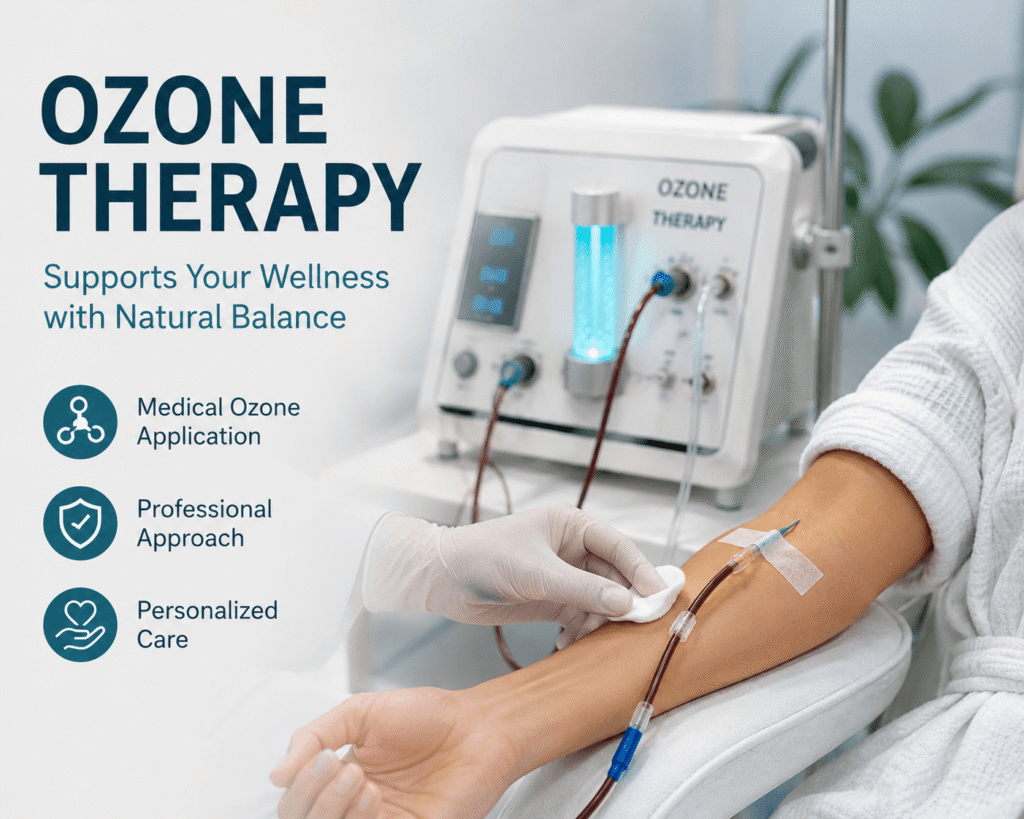
Ozone Therapy is a complementary medical approach that uses a controlled mixture of medical oxygen and ozone. It has been used in different medical settings and can be planned through several application methods depending on the patient’s individual needs and the physician’s assessment.
People researching ozone therapy often have questions about how the procedure works, what it involves, how long a session takes, and whether it is suitable for them. Understanding these points before making a decision can help patients approach the procedure with realistic expectations.
Ozone therapy should always be planned according to the individual’s health status and performed under appropriate medical supervision. It should not be considered a universal solution or a replacement for an established medical treatment.
1. What Is Ozone Therapy?
Ozone therapy involves the controlled medical use of ozone, a molecule consisting of three oxygen atoms. In clinical practice, ozone is prepared and administered according to a specific medical protocol.
The application method can vary depending on the purpose of the procedure and the patient’s individual circumstances. Different approaches may be considered by physicians, and not every method is appropriate for every person.
Before starting a program, the patient’s medical history, current health status, medications, and expectations should be discussed with a healthcare professional.
2. How Does Ozone Therapy Work?
The way ozone therapy is performed depends on the selected application method. A physician may choose a particular approach after evaluating the patient’s health and determining which method is appropriate.
One commonly discussed approach involves taking a controlled amount of blood, exposing it to a medical oxygen-ozone mixture under appropriate conditions, and returning it to the patient. Other ozone applications may use different administration methods.
Because ozone is a reactive molecule, its medical use requires controlled preparation and appropriate clinical procedures. The concentration, method of application, and overall protocol should therefore be determined by trained healthcare professionals rather than by the patient.
3. What Are the Potential Benefits of Ozone Therapy?
People often ask about the benefits of ozone therapy when considering whether the procedure is right for them. Ozone-based applications are generally discussed in the context of supporting certain physiological processes and overall wellness.
However, it is important to distinguish potential supportive effects from claims of guaranteed medical outcomes. Individual responses can vary, and scientific evidence is not equally established for every proposed use of ozone therapy.
For this reason, a responsible medical approach should focus on the patient’s individual situation rather than promising a specific result.
If you are considering ozone therapy for an existing health concern, discuss your expectations with your physician and continue any established medical care unless your doctor advises otherwise.
4. Is Ozone Therapy Safe?
Safety is one of the most important questions patients should ask before beginning Ozone Therapy.
As with any medical procedure, ozone applications may involve risks and should not be described as completely risk-free. Appropriate patient selection, correct preparation, suitable equipment, hygiene standards, and professional supervision are important factors.
Ozone should also be administered according to an established medical protocol. Patients should never attempt to use medical ozone independently or modify an application protocol without professional guidance.
Before your appointment, inform your physician about existing health conditions, medications, supplements, allergies, and previous medical procedures. This information can help the healthcare team determine whether the planned procedure is appropriate.
5. How Long Does an Ozone Therapy Session Take?
The duration of an ozone therapy session depends on the selected application method and the individual treatment plan.
Some procedures may be completed relatively quickly, while others require additional preparation and monitoring. The first appointment can also take longer because the physician may need to review the patient’s medical history and discuss the planned protocol.
Rather than assuming that every session will take the same amount of time, patients should ask their clinic how long they should plan to stay for their specific appointment.
After the procedure, the healthcare team may also recommend a short period of rest or observation depending on the application used and the patient’s individual condition.
6. Who May Be Suitable for Ozone Therapy?
Ozone therapy is not automatically suitable for everyone. Whether it should be considered depends on the individual’s health history, current condition, medications, and the reason for considering the procedure.
A medical consultation is therefore an important first step.
During the consultation, patients should provide complete information about their current healthcare situation. If they are receiving treatment for an existing condition, they should also tell the physician about their current treatment plan.
The fact that another person has had a positive experience with ozone therapy does not mean the same approach is appropriate for someone else.
7. Why Is Personalized Medical Planning Important?
One of the most important aspects of ozone therapy is individualized planning. Two patients may have similar goals but completely different medical backgrounds.
Age, medications, previous procedures, existing health conditions, lifestyle, and expectations may all influence how a physician approaches the procedure.
A personalized consultation allows the physician to determine whether ozone therapy should be considered and, if so, which application method may be appropriate.
This approach is particularly important for patients who are researching different ozone-based procedures. Ozone Therapy and EBOO Therapy should not automatically be considered the same procedure. EBOO involves extracorporeal blood circulation through a specialized system and may incorporate ozone as one part of its protocol.
Patients interested in EBOO can learn more about the procedure through our dedicated EBOO Therapy page and discuss with their physician which approach, if any, is appropriate for their individual situation.
Ozone Therapy in Istanbul, Turkey
For international patients considering Ozone Therapy in Turkey, the quality of the medical environment and professional supervision should be considered alongside the procedure itself.
Patients should look for clear information about the physician, clinical setting, application method, preparation process, and follow-up recommendations before making a decision.
At Dr. Ergin Ertan Clinic in Istanbul, ozone therapy is approached through individual medical evaluation and personalized planning. The patient’s health history and needs are considered before an appropriate protocol is determined.
Final Thoughts
Ozone therapy is a medical application that should be approached with realistic expectations and appropriate professional supervision. Its application methods, duration, and suitability can vary considerably from one person to another.
If you are considering ozone therapy, start with a medical consultation. Discuss your health history, medications, expectations, possible risks, and available alternatives with your physician.
The most appropriate approach is not necessarily the most intensive one. A carefully evaluated, individualized plan can help ensure that any ozone-based procedure is considered within the context of the patient’s overall healthcare needs.
