 Skip to content
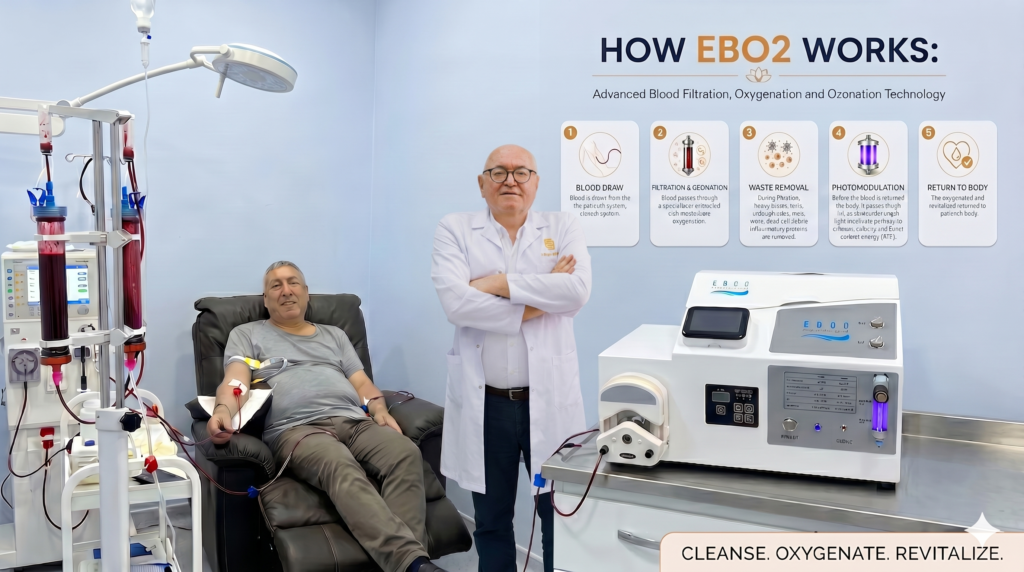
What are the benefits of EBOO therapy? This is one of the most common questions people ask when they first start researching EBOO. The procedure involves circulating blood outside the body through a specialized system. Depending on the protocol, the process may include filtration, oxygenation, and the controlled use of medical ozone before the blood is returned to the circulation.
When discussing the potential benefits of EBOO therapy, it is important to keep expectations realistic. EBOO should not be presented as a guaranteed solution for a particular disease or health condition. Every patient has a different medical history, and the reasons for considering the procedure can vary significantly.
Research into EBOO and related ozone-based procedures is still developing. For this reason, potential benefits should always be discussed alongside the limitations, possible risks, and available alternatives.
1. A Controlled Blood Filtration Process
One of the main features of EBOO is that blood passes through a specialized extracorporeal system during the session. Depending on the equipment and protocol being used, filtration may form part of this process.
This controlled circulation is one of the characteristics that distinguishes EBOO from a standard intravenous infusion.
The procedure is not simply about moving blood through a machine as quickly as possible. The medical team follows a planned protocol while monitoring both the system and the patient throughout the session.
2. Oxygenation as Part of the Process
Another reason people research the benefits of EBOO therapy is the oxygenation component associated with the procedure.
Depending on the EBOO system and protocol, blood may undergo a controlled oxygenation process while circulating outside the body. This takes place within the overall procedure rather than as a separate appointment.
However, oxygenation should not be interpreted as evidence that EBOO can automatically improve or cure a specific medical condition. What the procedure may offer an individual needs to be considered in the context of their overall health and medical needs.
3. Controlled Medical Ozone Application
Medical ozone is another component that may be included in an EBOO protocol. During the extracorporeal circulation process, ozone can be introduced according to parameters established for the individual procedure.
The amount and method of ozone application should not be decided by the patient. More ozone does not necessarily mean a better result.
Appropriate dosing, equipment, clinical conditions, and professional supervision are important considerations when medical ozone is involved.
Before undergoing the procedure, patients can ask their physician how medical ozone is incorporated into their specific EBOO protocol.
4. Individualized Support Can Be Considered
Not every EBOO session needs to look exactly the same.
Following an individual assessment, a physician may determine whether additional supportive applications are appropriate. In some cases, intravenous vitamins or other nutritional support may be considered as part of a personalized plan.
This does not mean that every patient undergoing EBOO requires IV vitamins or supplements. Additional support should be based on individual needs rather than automatically included simply because an EBOO session is being performed.
Patients should also avoid starting new supplements on their own without discussing them with their healthcare professional.
5. Multiple Steps Can Be Combined in One Session
One practical characteristic of EBOO is that several stages of the planned protocol can take place during a single appointment.
Blood circulation through the system, filtration, oxygenation, medical ozone application, and physician-approved supportive procedures may be coordinated within the same session when appropriate.
An EBOO session generally takes around 1.5 to 2 hours, although the exact duration can vary depending on the patient and the protocol.
The goal should not be to complete the procedure as quickly as possible. Appropriate monitoring and following the individualized protocol are more important than reducing the appointment time.
6. It Can Be Considered Within a Personalized Health Plan
When asking what are the benefits of EBOO therapy, it is also useful to consider the procedure as one part of a broader healthcare plan rather than viewing it in isolation.
Existing medical conditions, medications, nutrition, previous procedures, and current medical care may all be relevant when determining whether EBOO should be considered.
Patients receiving treatment for an existing condition should not stop medication or change their current treatment simply because they are interested in EBOO.
Any changes to an existing medical plan should be discussed with the physician responsible for the patient’s care.
7. The Protocol Can Be Planned Around Individual Needs
Perhaps one of the most important aspects of EBOO is the opportunity for individual medical assessment before the procedure.
Two people of a similar age can have completely different medical histories. One may take regular medication, while another may have recently undergone surgery or be receiving ongoing medical care.
For this reason, using exactly the same protocol for every person would not reflect individual differences.
A medical consultation allows the healthcare team to review relevant information and determine whether EBOO is appropriate before creating a personalized plan.
Does Everyone Experience the Same Benefits?
No medical procedure produces exactly the same experience or outcome for every person. The same applies when discussing the potential benefits of EBOO therapy.
Individual health status, medical history, medications, lifestyle, expectations, and the protocol used can all influence the overall experience.
Testimonials and experiences shared online can provide personal perspectives, but they should not be interpreted as evidence that another patient will experience the same result.
What Are the Benefits of EBOO Therapy?
Ultimately, what are the benefits of EBOO therapy? The procedure combines several elements within a controlled extracorporeal process, which may include blood filtration, oxygenation, medical ozone application, and individually planned supportive approaches.
At the same time, it is important to avoid making guaranteed health claims. Evidence regarding EBOO continues to develop, and the procedure should be considered according to each person’s medical circumstances.
If you are considering EBOO, begin with a medical consultation. Discuss your health history, medications, expectations, possible risks, limitations, and alternative options with your physician. An individualized evaluation can help determine whether EBOO is appropriate for you and how it may fit into your broader healthcare plan.
